

We grew up hearing the advice:
“Save for a rainy day.”
It sounded wise. Practical.
Enough to get us through a short disruption – a burst pipe, a broken fridge, a sudden medical bill.
But as I got older, navigated self-employment, and lived through economic slowdowns, something became clear:
📌 We’re no longer living in an era of occasional rainy days.
We are walking through rainy years.
And that requires a different mindset altogether.
Why “Rainy Day Thinking” Is No Longer Enough
Let’s call out the reality many are quietly feeling:
- Inflation is rising
- Job security is thinning
- The cost of living continues to climb
- And even governments seem uncertain about what works anymore
We’re facing a situation called stagflation – where prices go up, but economic growth slows, and job opportunities shrink.
And here’s the hard truth:
Even the policymakers don’t have a clear fix.
Interest rates go up, then down. More money gets printed. But none of it is solving the core issue.
So… where does that leave us?
What I Learned the Hard Way
As someone who has been self-employed for over 13 years and married for 12+, I’ve learned never to depend on anyone – or any system – to “rescue” me financially.
No employer.
No government.
Not even my spouse.
Because even the best people can’t carry everything forever.
I save and prepare not because I’m fearful, but because I’ve seen what happens when people don’t.
I’ve seen:
- Families scramble when the sole breadwinner falls ill
- Women left in the dark after a divorce or death
- Business owners burn through savings during quiet months, thinking things would bounce back “soon”
That’s when I shifted.
I stopped preparing for interruptions…
and started preparing for seasons.
From Rainy Days to Rainy Years: What It Really Means
A “rainy day” is something short – a flat tyre, a medical bill, a job transition.
But a “rainy year”?
That’s when:
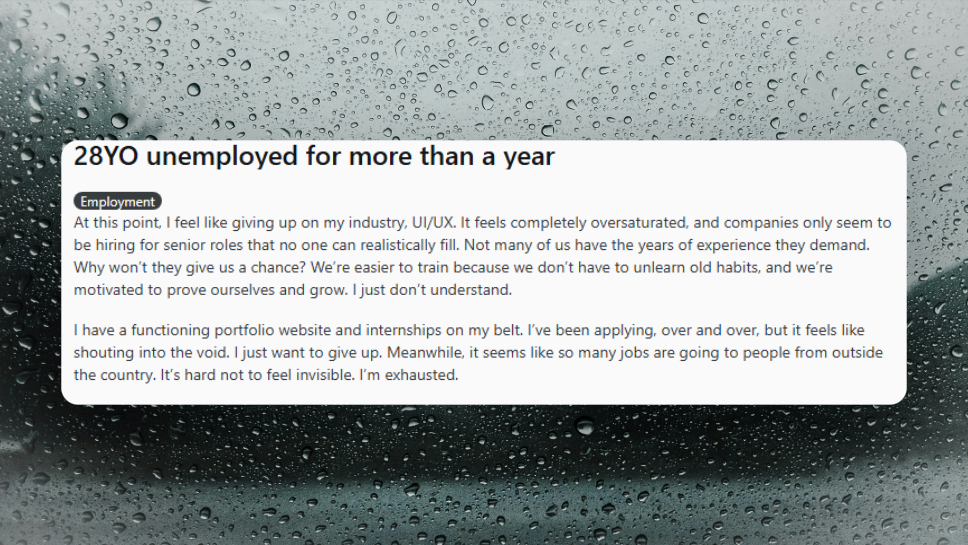
- You’re jobless for 12 months or more
- Your industry collapses
- A recession hits
- Or someone you depend on can no longer support you
This is not just about emergency funds anymore.
This is about building real financial durability.
Why I Choose Physical Gold
I talk often about saving in physical gold.
Not because it’s fashionable.
But because it helps me stay prepared without relying on anyone else.
Here’s why gold makes sense for me:
- 💰 It holds its value when currencies fluctuate
- 🤫 It’s quiet – no noise, no trends, no pressure to perform
- ⛓ It’s hard to spend impulsively – unlike cash
- 🧱 It’s a hedge – not a gamble
Some people say, “But Aidah, what if you never need it?”
And my honest answer is always:
“Alhamdulillah. That means life was kind.”
But if one day it isn’t?
I’ll be ready.
How You Can Start Preparing
Even if you’re starting from scratch, here’s what I always recommend:
- Track your actual monthly expenses
Know how much you really need – not just what you think. - Build layers of financial protection
✅ Cash savings for 3–6 months
✅ Long-term gold savings for 3–5 years and beyond
✅ Understand your CPF, insurance, and liabilities - Commit to boring consistency
Save a fixed amount monthly – even if it’s just $100.
Progress comes from what’s sustainable, not dramatic. - Protect what you can’t afford to rebuild
Your health. Your time. Your peace of mind.
Conclusion
If no one has told you this before, let me be the first:
It’s not paranoid to prepare.
It’s responsible.
Your future self will thank you – not for the luxury handbag or the weekend trip –
but for the discipline you had to say:
“I’m saving this in case life doesn’t go according to plan.”
Don’t just prepare for rainy days.
Prepare for rainy years.