
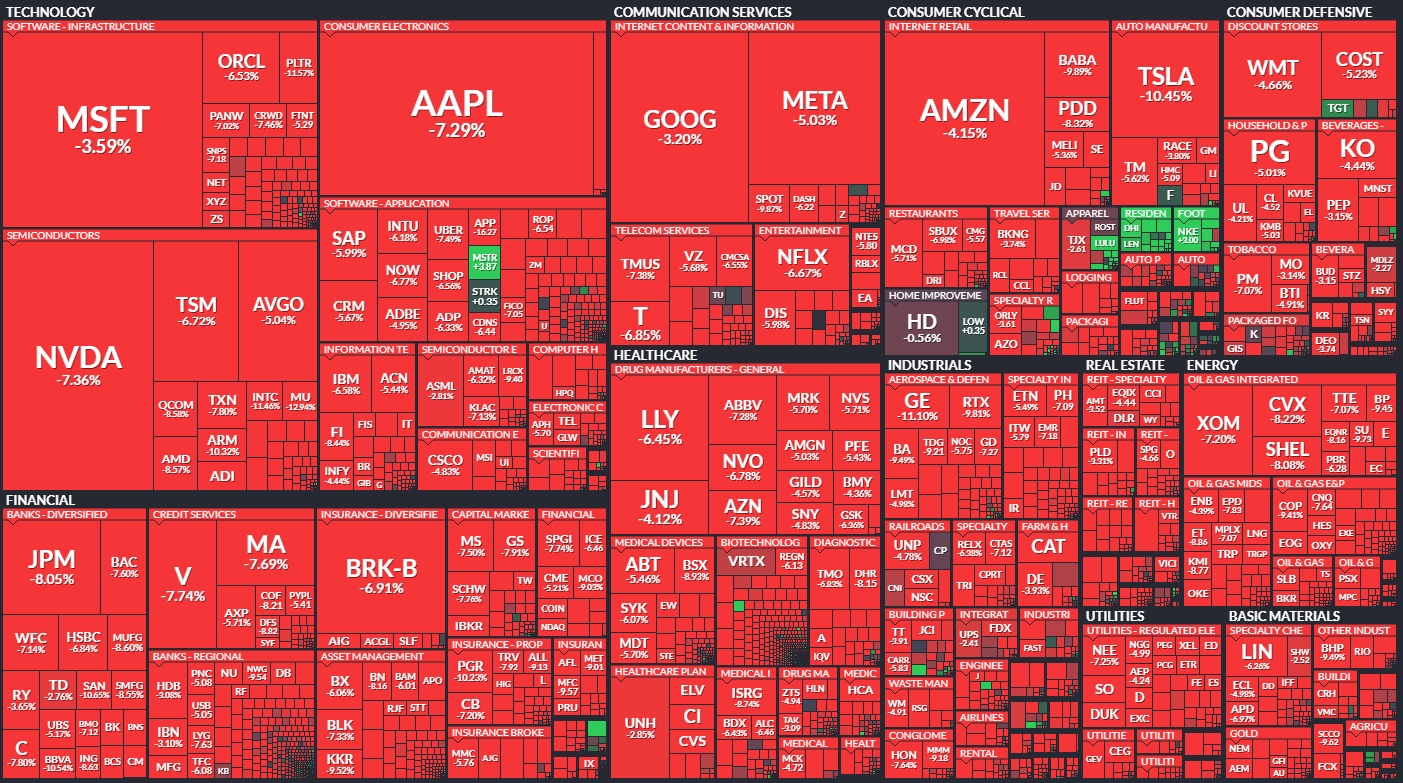

I’m writing this on 8th April 2025 — a day when markets are tumbling, headlines are screaming, and people around me are panicking as their portfolios turn red.
In moments like these, the value of diversification becomes more than just a textbook concept — it becomes a lifeline. This article isn’t about theory.
It’s about how I’ve personally come to structure my portfolio over the years, especially during my journey through self-employment, where managing both finances and emotions was key to survival.
Most people think “diversification” just means owning a little bit of everything.
A few stocks. Some bonds. A bit of CPF. Maybe even some crypto or insurance savings plans. But in truth?
Diversification is not about looking fancy – it’s about staying prepared.
It’s about designing your portfolio like a well-balanced team — where each part plays a clear, intentional role. Not just for growing wealth, but for protecting your future.
Let’s break this down using four common assets most Singaporeans already have or can access: CPF, stocks, cash, and gold.
Think of your portfolio like a Football Team
Your portfolio should function like a football team.
- CPF is your defender.
- Stocks are your attackers.
- Cash plays midfield.
- And gold? Gold is your goalkeeper – the one that steps up when everything else falls apart.
Each one has a purpose. And that purpose is linked to the goals you’ve set in life.
I developed this philosophy on money while I was growing my business
This framework wasn’t learned in a classroom. It was refined during the toughest years of running a business.
In the early days of my self-employment, when there was no steady paycheck, no employer CPF contributions, and no corporate safety net…
Everything had to be managed with care.
Every dollar mattered.
But more importantly – every emotional reaction to money mattered even more.
Because in business, you can do everything right and still have a bad month.
And if you panic, you make bad decisions. You over-invest. You under-invest. You burn out.
That’s when this truth became clear:
Financial resilience is not just about having money. It’s about knowing your money has a job.
I started noticing that I didn’t just have one type of money. I had different kinds of “monies” for different roles.
- Some I could not touch (CPF)
- Some I could grow (stocks)
- Some I could access quickly (cash)
- Some I held quietly in the background (gold)
Here is the way I viewed all these types of “monies” around me.
Each had a role. Each had a reason. And that mental shift gave me peace.
It allowed me to survive the lean months, say no to short-term fear, and continue building even when nothing felt certain.
🛡️ CPF: The Defender Who Always Shows Up
You don’t win trophies with defenders. But you can’t win anything without them.
CPF OA and SA act like risk-free bonds:
- OA gives you 2.5% p.a.
- SA gives you 4% p.a. (plus bonus interest)
- Both are guaranteed by the Singapore Government
- Interest compounds safely over decades
Yes, you can’t withdraw it freely. But that’s the point.
And after being used for property – I do my best to try to top it up to at least the Basic Retirement Sum. (BRS)
CPF is your forced savings system, designed to give you a dignified retirement. It protects your future lifestyle, even if your investments don’t do well.
Role in your portfolio: Capital preservation and long-term retirement base
Emotional value: Psychological security — you know something is working in the background
Suggested goal: “This pays my retirement basic living costs.”
🚀 Stocks & REITs: The Strikers Who Go for Big Wins
If CPF is steady and safe, stocks are the opposite – unpredictable, but full of potential.
- They beat inflation over the long run
- They fluctuate based on market cycles and emotions
- They grow your wealth — but can’t be relied on for short-term needs
Don’t chase hype. Don’t FOMO into what’s hot.
Use stocks to serve specific goals — like children’s education, future home upgrades, or early retirement.
Right now, the markets are reeling in a bloodbath due to Trump’s tariffs.
But again, this is where we learn and try to remember that this part of our portfolio is for the long-run.
Role in your portfolio: Long-term capital growth
Emotional value: Hope and ambition — a tool to expand your options in life
Suggested goal: “This lets me stop working 10 years earlier.”
💰 Cash: The Midfielder Who Buys You Time
Cash doesn’t grow much. But it buys you flexibility.
And when life throws a curveball – retrenchment, medical crisis, recession – you’ll be glad you had it.
- Should cover 6 to 12 months of expenses
- Avoid over-saving (inflation erodes value), but never go without it
- Cash is not an investment – it’s your emergency fuel
I’ve seen people forced to sell their stocks or property at a loss just because they ran out of cash. You never want to be a desperate seller.
Role in your portfolio: Liquidity and short-term survival
Emotional value: Peace of mind
Suggested goal: “This gives me 12 months to breathe.”
🥇 Gold: The Goalkeeper You Rarely Appreciate Until It Saves You
In the past, I used to watch soccer regularly. Besides Ryan Giggs, the one player I truly admired was Peter Schmeichel – one of the best goalkeepers the world has ever seen.
What I respected most about him was this: no matter how well the team played or how many goals they scored, you could always trust Schmeichel to protect the lead.
He made sure the team never lost the edge they worked so hard to gain.
That’s exactly how I see gold.
Gold is often misunderstood. It doesn’t score goals or win matches on its own.
But when everything else is under pressure, it quietly protects what you’ve built.
Yes, gold doesn’t pay interest. There is no such thing as dividends from gold.
It doesn’t grow like stocks. It just… sits there.
Until a crisis hits.
- In times of inflation, war, or economic collapse, gold tends to rise
- It is not tied to any single government or financial system
- It holds value across centuries, cultures, and currencies
You don’t need gold to make you rich. You need gold so you don’t become poor when everything else collapses.
In a world that feels increasingly fragile – politically, economically, and environmentally – physical gold is your hedge against the unknown.
Role in your portfolio: Crisis protection, inflation hedge
Emotional value: Stability when the world becomes chaotic
Suggested goal: “This is my ‘no matter what happens’ fund.”
Putting It All Together
When you assign a role and a goal to each asset, your portfolio stops feeling like a scattered toolbox — and starts to look like a well-run team.
| Asset | Role | Goal |
|---|---|---|
| CPF OA/SA | Capital protection | Retirement base |
| Stocks | Growth engine | Financial freedom / optionality |
| Cash | Liquidity | Emergency buffer |
| Gold | Store of value | Crisis insurance |
This structure gives you resilience.
It allows you to handle market crashes, job loss, inflation, and unexpected events – without panic-selling or regret.
And most importantly, it aligns your money with your values and life stage.
Build for Life, Not Just for Growth
A well-diversified portfolio is not just a financial decision.
It’s an emotional one. A moral one. A future-defining one.
It’s not about trying to be clever. It’s about being prepared.
It’s about knowing what each dollar is for.
And that clarity – is what gives you peace of mind in an uncertain world.
Ready to Take Stock of Your Own Portfolio?
Start by writing down the goal for each asset you hold.
And if you’re not sure what role gold could play in your situation — reach out.
Let’s look at your portfolio through a lens of purpose.